
Geological Formation of Cozumel Caves
Limestone Geology of Cozumel
The island of Cozumel is composed primarily of limestone, a rock formed from ancient marine sediments.
Over long periods of time, slightly acidic freshwater dissolves limestone, gradually forming underground voids and passages. This process is known as karst dissolution.
Formation of Cave Passages
When sea levels were lower during past ice ages, many of the caves beneath Cozumel were dry. Rainwater filtered through the limestone and slowly enlarged fractures within the rock.
These processes eventually formed the cave passages that exist beneath the island today.
Flooding of the Caves
As sea levels rose following the last glacial period, many of these caves flooded.
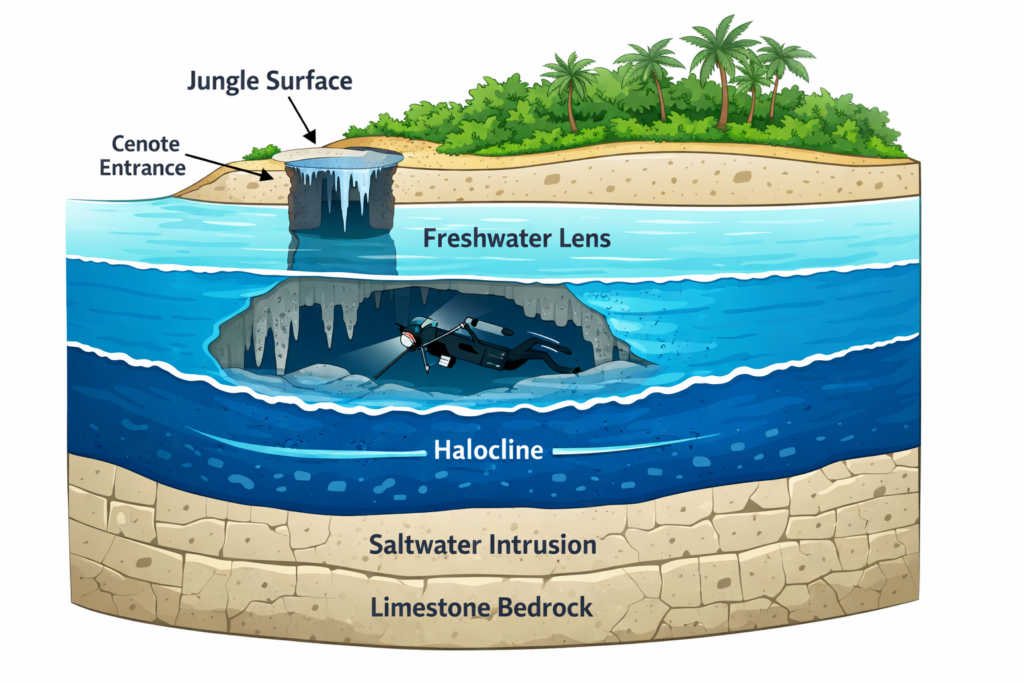
Today the caves exist beneath a freshwater lens that floats above intruding seawater, creating the haloclines commonly seen by divers exploring the caves.
Cenotes and Cave Access
In some locations, sections of the cave ceiling collapsed, forming openings known as cenotes. These openings provide access to caves that extend beneath the island’s jungle and coastline. Several cenotes on Cozumel provide entry into underwater cave systems.
Examples of Caves on Cozumel
Examples of cave systems formed through these processes include:
- Aerolito Cave System
- Chempita (Jade Cenote)
- Cocodrilo
- Cueva Quebrada
- Tres Potrillos
- Sin Nombre
- Kuuchi T’uuchtaj
Each cave reflects the same geological processes that shaped the underground landscape of the island.
For more information, visit Cozumel Cave Systems